


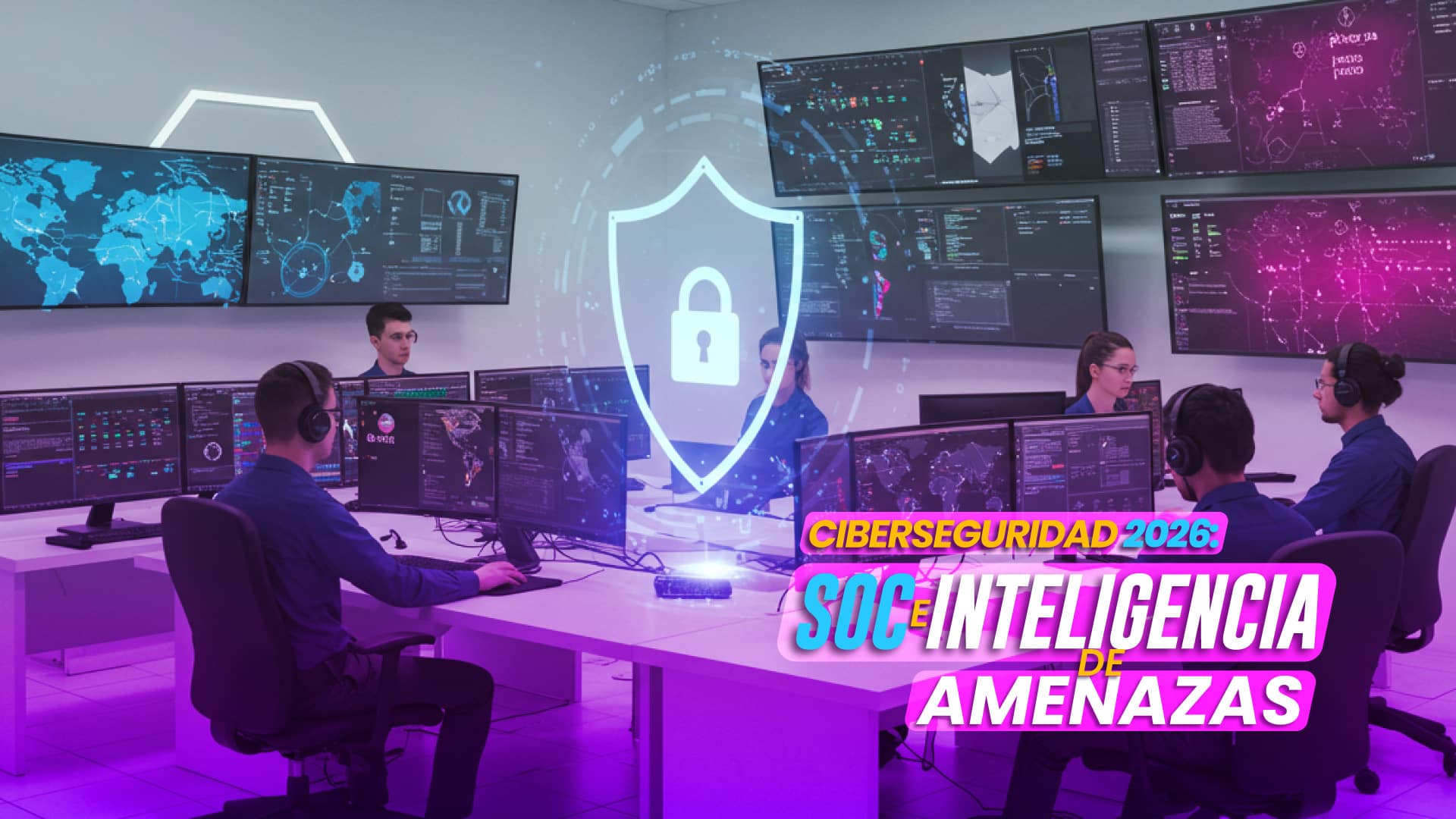
The beginning of 2026 reinforces a reality already familiar to organizations: enterprise cybersecurity has become a core component of risk management, operational continuity, and the protection of digital reputation. In an environment shaped by accelerated technology adoption, the attack surface continues to expand, demanding more proactive and intelligence-driven security approaches.
In this context, threat intelligence plays a critical role by enabling organizations to anticipate risks, identify attack patterns, and understand how malicious actors evolve their techniques. The analysis of data from open, technical, and contextual sources has become an essential input for security decision-making, particularly when integrated into SOC (Security Operations Center) workflows.
Today’s SOC teams face the challenge of managing an ever-growing volume of alerts, incidents, and risk signals. This makes continuous monitoring, risk-based prioritization, and event correlation indispensable capabilities. The combination of security operations and threat intelligence helps reduce detection and response times while improving visibility into threats that directly impact critical business assets.
Another key factor in 2026 is the exposure of brand reputation in the digital environment. Identity impersonation, domain abuse, data leaks, and the malicious use of digital platforms can generate impacts that go beyond the technical realm and erode trust among customers and partners. As a result, digital ecosystem monitoring and early risk detection are now naturally integrated into enterprise security strategies.
Finally, more mature organizations are moving toward a cyber resilience approach, where security is not viewed as a final state but as a continuous process of assessment, adaptation, and improvement. Integrating threat intelligence, SOC operations, and risk management enables companies to face an increasingly dynamic and challenging digital landscape with greater confidence.